Blog

  • Why new hobbies die before the second month

    Why new hobbies die before the second month

    There’s a peculiar optimism in buying equipment for a new hobby. The guitar arrives, the camera gets its own bag, and somewhere in the house a box of paints suggests you’ve become a more interesting person. Then Tuesday happens. By week five, the box hasn’t moved.

    That doesn’t mean you lack discipline. Often, the hobby simply never found a workable place in your life. Four familiar mistakes can finish it off before you’ve properly discovered whether you like it.

    The guitar is still in its box, but the credit-card bill has arrived. Here’s why enthusiasm stalls and how to make room for week five.

    Mistake one: buying the hobby before trying it

    Shopping feels like progress because it has a satisfying ending: you pay, and something arrives. Learning guitar offers no such courtesy. Buy an instrument, stand, pedals and an impressive number of cables, and you may still lack a reason to pick the thing up.

    Start with a trial, not a collection. Ask to borrow a guitar for a fortnight and arrange two or three 15-minute sessions. If borrowing isn’t possible, buy one playable second-hand instrument rather than a complete starter setup. A used Squier SA-105 acoustic is one concrete option: allow approximately £50–£70 for a basic second-hand acoustic, though condition and availability vary. A retailer’s listing puts that model at £59.99. If you can, ask someone who plays to check that the strings aren’t painfully high and that it holds its tuning.

    The same rule applies to photography, painting or anything else with an accessories aisle: get only what you need for your first attempt. Then put a date in the diary to reconsider the purchase. Have you enjoyed doing the activity, or mainly enjoyed researching it? I ask as someone who has spent a heroic amount of time comparing equipment for things I’ve barely done. Spend money once you’ve gathered evidence, not instead of gathering it.

    Mistake two: planning for the week you wish you had

    On a quiet Sunday, an hour every evening sounds entirely reasonable. Come Wednesday, work has overrun, somebody needs a lift and the sofa is making a compelling argument. An ambitious timetable can make one missed session feel as though the whole project is blown.

    Plan around your least glamorous normal week. Look at next week’s calendar for five minutes and choose two slots of 15 minutes each. Put them somewhere plausible: after breakfast on Saturday, perhaps, and before you settle down on Tuesday. You need no experience to make the plan; you’re just finding space. If you have more time when a session comes around, carry on. If you don’t, the short session still counts.

    The NHS’s Every Mind Matters advice includes enjoyable activities when planning a balanced week and suggests trying just five minutes when getting started feels difficult. That isn’t a promise that five minutes will transform your life. It’s permission to start without clearing an entire evening.

    Leave a little slack, too. Two sessions you actually manage are more useful than seven that look admirable in a notebook. A hobby should make your week more enjoyable, not become another unpaid appointment with a disappointed manager — especially when the manager is you.

    Buy less, plan for the week you actually have, and make the next session easier to start than to postpone.

    Mistake three: expecting the beginner stage to be brief

    The first week is full of possibilities. By the third, you may have awkward hands, muddy colours or photographs that looked better in your head. It’s tempting to read that gap between taste and ability as proof that you’re no good at the hobby. More often, it means you’ve just started.

    Make the target smaller and closer. For guitar, spend 15 minutes changing between two chords you can already form, rather than demanding a flawless song by the end of the month. For drawing, sketch the same mug once a week for four weeks. A complete beginner can do either exercise; the point is to give yourself something specific to return to, not to produce work you’d show a stranger.

    Keep a brief record if it helps: what you attempted, what was tricky and what you might try next. It takes about a minute after each session. You may spot an improvement, or find that one part of the hobby is more enjoyable than the goal you first set. Both are useful information.

    Resist turning every spare moment into a tutorial binge. Watching an expert make it look effortless is entertaining. Your own uneven attempt is how you find out whether you enjoy doing it. Those are different hobbies, and only one requires you to put the kettle down.

    Mistake four: leaving practice to chance

    “I’ll do it when I get a moment” is a charming plan until the moment arrives and you can’t find the tuner. A new hobby has to compete with familiar routines, so make the next session easy to start.

    At the end of each practice, spend two minutes setting up the next one. Put the guitar on its stand where you’ll see it, leave the sketchbook open at a blank page, or write a note saying, “Tuesday: try those two chords again.” Keep equipment safely out of the way where necessary; a guitar across a hallway is less an invitation than a trip hazard. Decide when you’ll return before you pack up. When the time comes, you’ll have one small job rather than another round of decisions.

    After four weeks, give the hobby a fair review. Did you make room for it? Was any part enjoyable once you began? Would a shorter session, a different project or some company make you want to continue? If so, adjust the plan and try another fortnight.

    If the honest answer is no, you’re allowed to stop. Losing interest after actually trying something is a verdict, not a character defect. Pass on the equipment, reclaim the space and take what you learned into the next experiment. Week five matters only if you still want to be there.

    why-new-hobbies-die-before-the-second-month_INS2_MJ

    To give a new hobby a chance beyond the first month, try it before investing heavily, book a couple of short sessions and set beginner-sized goals. Prepare the next attempt before you finish this one. If you’ve given it a fair go and still don’t enjoy it, move on without calling it a failure.


    Sources

  • Can chess or bridge keep your brain sharper?

    Can chess or bridge keep your brain sharper?

    There is something attractively old-fashioned about the idea that a chessboard or a pack of cards might do your brain some good. No subscription, no screen nagging you about a 47-day streak. But the leap from ‘this makes me think’ to ‘this will stop dementia’ is where the argument runs out of road. Chess and bridge are worth playing. The question is what, beyond the game itself, we can reasonably expect from them.

    A chess match or bridge night beats another evening scrolling. Whether either protects your brain is less certain — and the company might be doing half the work.

    What chess and bridge actually give you

    Chess makes you hold possibilities in mind, weigh a move against its consequences and change course when your opponent ignores your excellent plan. Bridge adds memory, probability and communication with a partner: you bid with incomplete information, track what has been played and try not to glare when your partner reads your clever signal as something else entirely. Both offer a mental challenge that grows with your skill.

    They also give you a reason to practise. You might learn an opening, spot a familiar pattern or become less likely to give away a trick. Getting better at chess or bridge is a perfectly good outcome, even if it tells us little about how well you remember your PIN or organise a busy Tuesday. Enjoyment counts here. A game you look forward to is more likely to stay in your week than a worthy ‘brain workout’ abandoned after three sessions.

    Bridge has one particularly obvious extra ingredient: it needs a partner and opponents. A regular table offers conversation, a shared project and a reason to see people. Chess can do that too, especially across a board rather than against an anonymous app, though it is easier to play alone. None of this makes bridge a proven medical intervention. It does mean that if the cards are mainly an excuse to meet friends, the evening has not failed just because you forgot which suit was trumps.

    The evidence is interesting, not a guarantee

    Research gives us grounds for curiosity, not a winning ticket. A 2023 study in JAMA Network Open followed 10,318 generally healthy Australians aged 70 or over. More frequent participation in a combined group of activities — games, cards or chess, plus crosswords and puzzles — was associated with a 9% lower dementia risk over follow-up. That figure does not tell us what happens when someone takes up chess or bridge. The researchers found no separate protective effect for either game; in their analysis of individual activities, games or cards did not show the association seen for the combined group.

    It was an observational study: researchers recorded what people already did rather than assigning them to play. They adjusted for factors including education and physical activity, but players could still differ in ways the questionnaire could not capture. Healthier people may find it easier to carry on playing; early changes in thinking might make someone stop. Cause and effect can run the other way. The participants were also considerably older than most Midcent readers.

    Trials do not settle it, either. A small, non-randomised, 12-week chess-training study reported improvements on cognitive measures and quality of life among older adults in care settings. Encouraging, certainly; proof that chess prevents dementia in a healthy 55-year-old, no. The World Health Organization’s updated 2026 dementia-risk guidelines recognise potential cognitive benefits from stimulating activities while noting that evidence they prevent dementia remains limited. Better test scores — or a higher chess rating — are not the same as better everyday functioning decades later.

    Getting better at a game is real, but it does not prove you have protected your brain from dementia.

    Play the game, but mind the bigger picture

    If you enjoy either game, keep it in the diary. A weekly chess match of roughly 45–60 minutes is a reasonable start if you know the basic rules; you need no rating or tournament experience. For bridge, try beginner sessions if necessary, then arrange a regular table when you and your fellow learners feel ready. The point is a repeatable pleasure, not a self-imposed examination. Playing with people you like may be the best reason to turn up.

    Just do not let an absorbing evening become an alibi for neglecting the less glamorous stuff. The NHS recommends at least 150 minutes of moderate physical activity each week, alongside strength work twice a week, as part of its advice on reducing dementia risk. It also identifies loneliness or social isolation as possible risk factors. The WHO’s 2026 guidance places cognitive and social activity within a wider approach that includes physical health. Neither organisation suggests a board game makes up for sitting still the rest of the week.

    Sleep belongs in the picture too: leave yourself enough time for it rather than letting a late match eat the night. But let’s be precise about the claim. The WHO says poor sleep is associated with cognitive problems while evidence that sleep interventions themselves prevent dementia remains insufficient. Looking after sleep makes sense for how you feel and function; it is not a promise of immunity. If a change in memory or thinking persists and worries you, speak to your GP rather than treating a difficult bridge hand as a diagnostic test.

    The verdict: chess and bridge offer challenge, pleasure and, especially around a bridge table, companionship. Play because those things make for a better evening. Anything more ambitious for long-term brain health remains unproved.

    can-chess-or-bridge-keep-your-brain-sharper_INS2_MJ

    Chess and bridge give you rewarding ways to think and spend time with others, not treatments or proven dementia prevention. Pick the game you enjoy, make room for people, and keep sleep and physical activity in the picture.

    Sources

  • WhatsApp or pub: choose your book club format

    WhatsApp or pub: choose your book club format

    A book club for old friends sounds easy until somebody suggests actually meeting. One man can’t justify a pub bill, another finds a long walk difficult, and a third has spent enough of his life commuting to regard another train journey as a personal insult. Forget what a book club is supposed to look like. What matters is whether your particular friends can turn up, hear one another and say what they thought of the ending.

    One mate hates the pub bill, another can’t manage the walk, and nobody wants another commute. Pick a book club that survives real life.

    Home or pub: comfort versus a clean getaway

    At home you have the best chance of an unhurried conversation. Close a door, turn down the music and let someone finish a point without competing with the fruit machine. There’s no venue bill or obligation to buy a drink; agree that guests bring their own and nobody has to produce a spread worthy of a television cookery programme. Bad weather needn’t cancel the meeting, though everyone still has to get there.

    Access is the catch. The most generous host may live up two flights of stairs, with a narrow hallway and a downstairs loo that exists only in estate-agent poetry. Ask about steps, seating, toilets and travel before volunteering someone’s living room. Hosting also means tidying, answering the door and knowing when to send everyone home. Rotate homes only if people genuinely want to host; otherwise, the same mate gets lumbered with it.

    At the pub nobody has to clean up, and neutral territory makes it easier to leave at the agreed time. Around a quiet table, conversation can flow beautifully. Beneath a televised match, it can dissolve into six separate conversations. Try an early, quieter slot; check the noise, step-free entrance, seating and accessible toilet rather than assuming the word ‘accessible’ settles everything. Travel and rain still count, even if the meeting itself is indoors.

    Cost is the obvious weakness. The Morning Advertiser’s 2026 survey put the average pint at £5.34; roughly £4–£7 for a pint is a useful, approximate budget, varying by beer and location. Two drinks and a journey can make a supposedly casual evening rather less casual. Verdict: home wins for quiet and a flexible spend; the pub wins for low hosting effort, provided everyone can afford and comfortably use it.

    Video call or walk: no commute versus fresh air

    By video call makes most sense when travel keeps friends apart. There’s no venue bill, no hosting and no weather problem beyond finding a reasonably quiet corner at home. WhatsApp supports group video calls, so a group already using it needn’t learn a new meeting platform. Check that everyone can get online without worrying about mobile-data costs, though, and offer a five-minute practice call if needed. That takes no technical expertise, just patience.

    A screen doesn’t remove every access problem; it changes them. Poor sound, small images and people talking over one another can make discussion hard to follow. Give each person a turn, use headphones where helpful and keep cameras on if someone relies on seeing faces to follow speech. Age UK’s digital-inclusion guidance recommends checking individual access needs rather than assuming a video call works for all. A call is wonderfully convenient for the friend who cannot travel, and deeply unappealing to the one who has spent all day in video meetings. Verdict: excellent for distance, less good for effortless group chatter.

    On a walk there’s no host and no venue charge, though getting to the start may still cost money. Moving side by side can make honest conversation easier than staring across a table. But the person at the back may never hear the person at the front. Keep the group small, choose a short, level route with somewhere to sit and a toilet nearby, and stop occasionally so everyone can join the same discussion. Allow about 15 minutes to check the route beforehand; no walking-club experience is needed. The Ramblers’ route details show why surface, rest stops and toilets are worth checking.

    Rain, darkness, uneven paths and differing stamina can turn an agreeable stroll into an exclusion policy. Verdict: lovely when the route suits every member; a poor default when it doesn’t.

    The best book club format isn’t the most atmospheric one; it’s the one that doesn’t quietly leave a friend out.

    Choose for the mate most likely to miss out

    Before voting for your favourite format, ask what would stop each person coming. Spend ten minutes gathering three answers from everyone: the most they’re comfortable spending on an evening, how far they can reasonably travel, and anything they need to take part — a step-free toilet, a quieter room, a place to sit or a screen-free night. No one owes the group a medical explanation or a bank statement. ‘That won’t work for me’ is enough.

    Then choose a format for the next two meetings, not for eternity. If travel is the sticking point, try video. If screen fatigue is the problem and someone can offer a suitable space, try home. If nobody wants to host, test a quiet pub with a stated spending limit. Try a walk only when everyone can use the route comfortably. After two meetings, take five minutes to ask who could hear, who could afford it and who would come back. That beats asking whether it felt sufficiently literary.

    Rotating formats can spread the compromises: perhaps home one month, video the next and an occasional pub evening. But rotation is fair only if the person who cannot manage the walk, pub or screen still has a genuine way to join. Don’t make someone miss every fourth book for the sake of a tidy calendar.

    A WhatsApp chat is handy between meetings for choosing the next title, confirming the time and posting the thought you forgot to say. Agree to flag spoilers and keep notifications manageable. Don’t quietly turn the chat into the whole club: fast typists dominate, messages arrive while people are working, and not everyone wants another conversation living in their pocket. Keep the meeting as the main event, in whichever form your friends will actually attend. You’re arranging an evening together, not auditioning to chair the Booker Prize.

    whatsapp-or-pub-choose-your-book-club-format_INS2_MJ

    Start with access, travel and a comfortable budget; try a format for two meetings, then change it if someone is missing out. Home, pub, video and walking can all work. WhatsApp is useful glue between meetings, not a compulsory substitute for one.

    Sources

  • Before Letting AI Into Your Home, Check This

    Before Letting AI Into Your Home, Check This

    Ask an AI chatbot for three dinners using chickpeas, rice and whatever vegetables are left in the fridge. Name a UK supermarket if you want a practical shopping list. Just don’t upload a photograph of the kitchen noticeboard while you’re at it.

    It’s a sensible first test: useful if it works, harmless if it suggests something revolting. Before you move on to family plans or connected devices, run through these checks. You need no technical experience; allow about 20 minutes for the first pass.

    Your new AI helper can plan dinner, but sharing family details or handing it the heating controls could turn convenience into a nuisance. Check first.

    Start with dinner, not your life story

    • Choose a tool you can identify. Start with an established service such as Google Gemini, available in the UK, rather than a chatbot promoted through a mystery download. Find its official website or app listing, the company behind it, its privacy notice and a way to manage your account. If you have to hunt for those, move on. A reputation is a reason to inspect a service, not a promise it will never mishandle data.
    • Give it a small, fictional brief. Try: ‘Suggest four vegetarian dinners for two adults, using ingredients commonly sold in UK supermarkets.’ Artificial intelligence, or AI, is software that produces an answer from your instructions; it is not a neighbour who needs to know your routine. See whether the suggestions are usable. If the shopping list calls for six jars of saffron, you have learned something without losing anything more valuable than five minutes.
    • Put payment on probation. Start with the free option, if one is offered. A paid version might offer higher usage limits or particular features, though the offer varies by service. Identify the job you cannot do on the free version, check the current UK price and cancellation terms on the provider’s checkout page, then decide. Paying does not, on its own, buy confidentiality or better judgement. For occasional recipes and draft messages, the upgrade may solve a problem you do not have.

    Find out what happens to your chats

    • Inspect three separate controls. Look for privacy information, conversation history — the list of chats saved to your account — and model-training settings. ‘Training’ means using data to improve the system that generates answers. Find out whether your prompts may be used for that purpose, whether you can opt out, and whether a temporary chat is available. These may not be the same switch. Allow about ten minutes to read the settings and the provider’s explanation before entering anything personal.
    • Read the deletion terms, not just the button. Storage periods and settings vary between services and can change. Google’s Gemini privacy information, for example, says some chats are retained temporarily even when activity saving is switched off, and that deleting activity does not remove certain material already reviewed by people. That does not describe every chatbot. It does show why ‘delete chat’ should not be taken to mean ‘every copy vanished immediately’.
    • Keep the family out of the prompt. Do not type names, addresses, children’s details, passwords or identifiable family stories into an everyday chatbot. Leave out school names, appointments and photographs that show where you live. You can still ask, ‘Draft a polite note about changing a weekend plan’, then add the real details yourself afterwards. UK data protection law places obligations on organisations; it does not guarantee privacy for everything a household user chooses to submit.

    Deleting a chat does not necessarily mean its data has already disappeared.

    Check the doors you’ve opened

    • Review permissions on your phone or computer. A permission lets an app use something such as your microphone, camera or location. Open the device’s app settings and turn off access the AI tool does not need for your chosen task. Dinner suggestions do not require your contacts. If you want to dictate a question later, you can enable the microphone then. This takes a few minutes and no specialist knowledge.
    • Inspect connected accounts separately. A connected account lets a tool reach another service, potentially including email, calendar or files. Check the AI service’s connections page alongside your Google, Microsoft or other account settings. Disconnect anything you do not recognise or no longer use. Before approving a new connection, ask what the tool could read, change or send. Access to the family calendar is a rather bigger decision than asking what to cook on Thursday.
    • Verify answers with consequences. AI can make a wrong answer sound reassuringly tidy. Which? found UK-specific weaknesses when testing chatbots on money questions; Ofcom’s research also describes inaccurate answers and unreliable links. If it’s about medication, check NHS guidance or ask a pharmacist. For tax, use HMRC; for benefits, GOV.UK. Open the original page yourself and check its date. An AI summary can help you frame the question, but it should not have the last word on your health, money or safety.

    Keep your hand on the thermostat

    • Separate suggestions from actions. Asking AI to suggest a heating schedule is different from letting it change the thermostat. The same applies to lights, cameras, locks and any other smart-home automation — a rule that makes a device act automatically. Leave AI disconnected from household controls while you are still learning what it can do. You do not need an experimental assistant setting the house to 16°C because it misunderstood ‘save energy’.
    • Test the escape route before any connection. If you do choose an automation, identify which account authorises it, which devices it can operate and whether it needs your approval before acting. Locate the physical controls and the app’s manual override. Check how to pause the rule and revoke access. Try the override while you are at home and nothing important depends on the result. Allow 15–20 minutes and follow the device maker’s instructions; if you cannot explain how to stop it, do not turn it on.
    • Keep the underlying devices secure. The National Cyber Security Centre advises keeping smart devices updated, using two-step verification where available — an extra sign-in check alongside your password — and switching off remote access if you do not need it. That matters whether or not AI is involved. AI at home earns its place when it saves you a chore while leaving you able to see, question and reverse what happens next.

    before-letting-ai-into-your-home-check-this_INS2_MJ

    Begin with a small task. Check what the service stores, leave family details out, limit its access and verify important answers. Let AI suggest dinner; it has a lot of trust to earn before it gets anywhere near the heating.

    Sources

  • The smart bird feeder that hijacks your tea break

    The smart bird feeder that hijacks your tea break

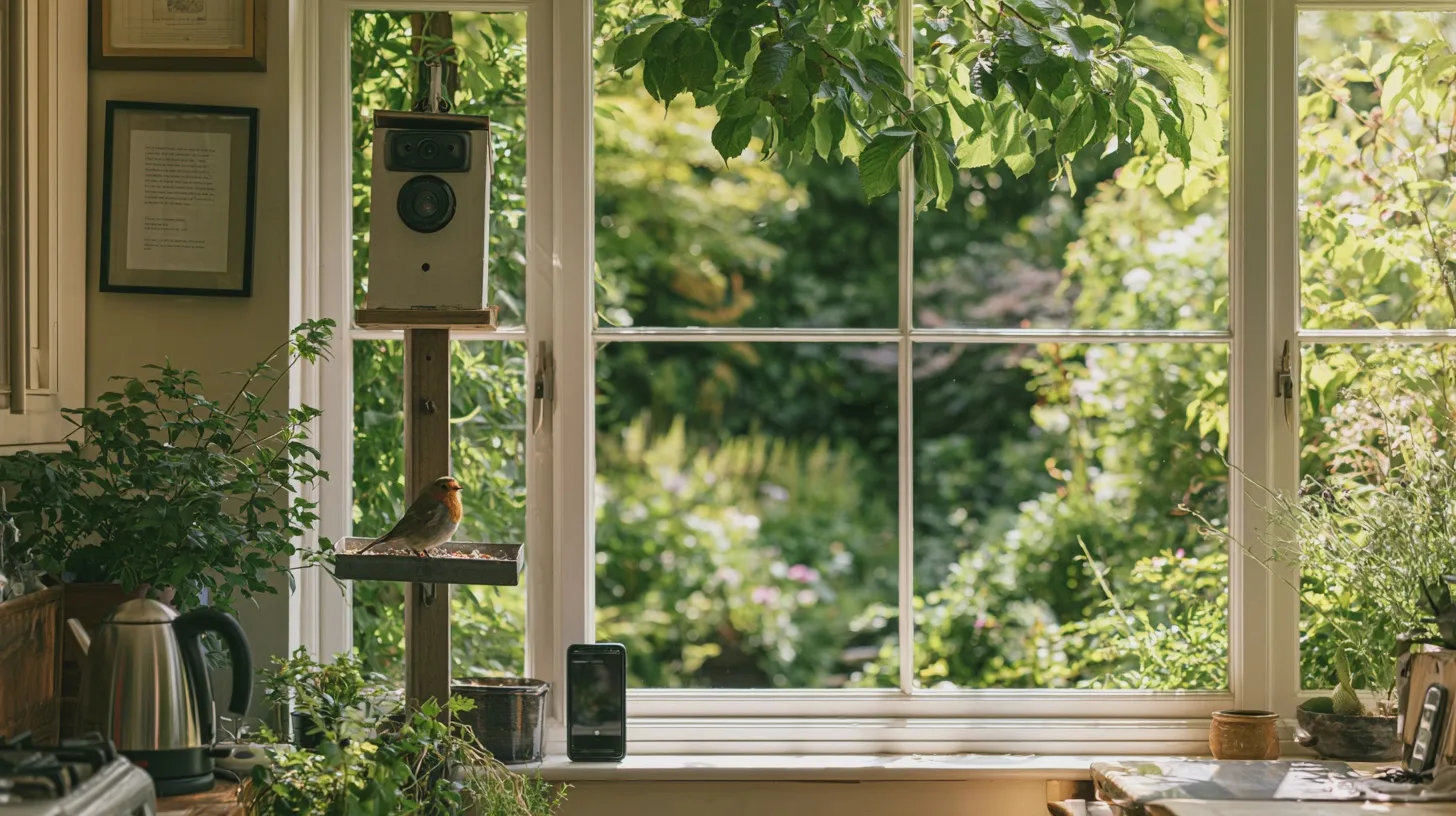
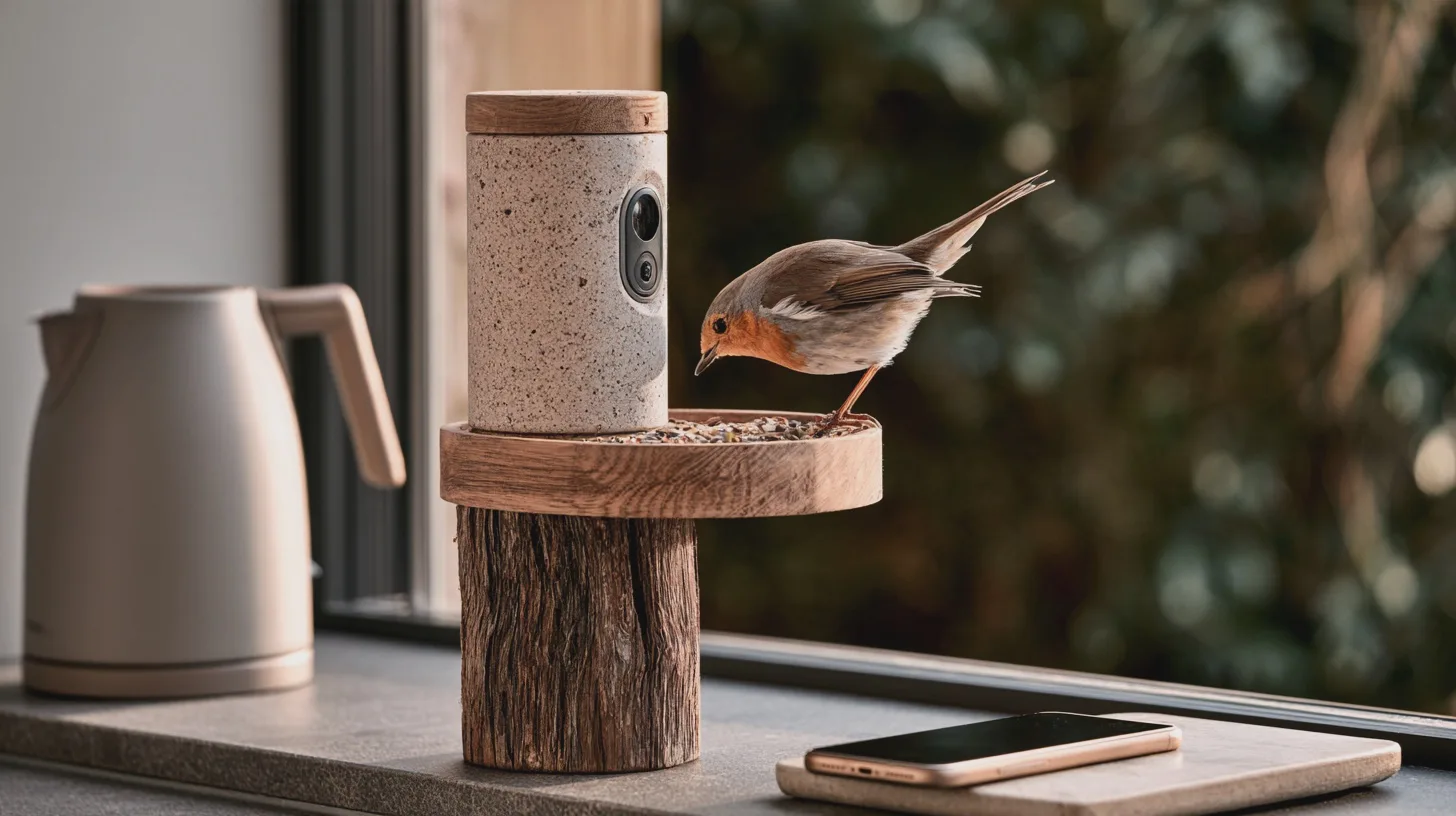
    The kettle goes on. A robin appears. By the time you reach the window, it has left without signing a release form. A smart bird feeder promises the close-up you missed: a camera watches the feeding spot and sends visits to your phone.

    That can be delightful. It can also be an expensive way to learn that your garden has poor Wi-Fi and a seed tray needs scrubbing. Here is how to buy and set one up without making the technology—or the birds—pay for your enthusiasm.

    A robin lands while the kettle boils; your phone catches the action. Pick the right feeder, place it sensibly and dodge Wi-Fi grief and pointless subscriptions.

    Buy the view, not the bird-identification pitch

    You have two sensible routes. A complete camera bird feeder puts the lens next to the food. Currys currently lists the Bird Buddy 2.0 with solar roof for approximately £180 in the UK. It advertises 5-megapixel photos and 2K video, plus a rechargeable camera helped by the roof-mounted panel. Its app sends visit alerts and collected clips, which Bird Buddy calls ‘postcards’. The feeder is described as weather-resistant, but the listing gives no specific ingress-protection rating; ask before assuming every joint will welcome a British winter.

    Alternatively, train a separate camera on a conventional feeder. Birdfy lists its standalone Birdfy Cam from approximately £80, with 1080p as its standard video setting, an optional solar panel, a rechargeable battery and an IP65 rating against dust and water jets. Pair it with the RSPB Classic easy-clean seed feeder, currently approximately £11. Allow roughly £90 for the pair before any mounting extras, and check the Birdfy bundle at checkout: the solar option may change the price.

    The separate arrangement looks less tidy, but you can take the feeder apart without treating the camera like a kitchen utensil. More pixels will not rescue a badly aimed lens; a close view of the feeding ports is more useful than footage of the entire lawn.

    Check the app before buying, too. Birdfy offers live viewing, alerts and recorded clips without a subscription, but species recognition on its subscription version costs extra after a trial; it also sells longer recordings and additional storage. Bird Buddy provides core clips and viewing free, while Premium adds features including automatic advanced identification. Neither needs a paid plan simply to show you a bird. Check any trial’s renewal terms rather than letting an app turn a blue tit into a direct debit.

    Give the Wi-Fi a garden exam

    Before ordering, stand exactly where the camera would go. Turn off mobile data on your phone, connect to your home Wi-Fi and play a video or make a video call for a minute or two. Repeat with the back door closed. A phone working indoors beside a window tells you little about a damp fence several metres away. If the connection drops or stalls, move the proposed feeder closer to the house or improve coverage first.

    Then read the exact model’s network specification. The Birdfy Cam requires 2.4 GHz Wi-Fi—the longer-reaching of the two common home Wi-Fi bands—not a 5 GHz-only network. Check your router’s settings or provider app to confirm that 2.4 GHz is enabled. Routers that give both bands one network name may connect automatically, but if pairing fails, follow the maker’s instructions rather than changing security settings at random. Check the Bird Buddy model’s requirements just as carefully; a brand name tells you nothing about its Wi-Fi specification.

    Pair and update the camera indoors first, then test its live picture at the intended spot before drilling. If you are comfortable installing a phone app, allow roughly 30–60 minutes for pairing, signal checks and a trial position; mounting may take longer if you need tools.

    Aim for the perch or feeding ports to fill a useful part of the frame, with enough background to see arrivals. Avoid pointing into bright sky. Check the live view for neighbouring windows, gardens or a shared path, and turn the camera away from them. The Information Commissioner’s Office says data protection law applies if a home camera captures beyond your property boundary. The simplest fix is to frame the birds, not the neighbours.

    The best camera bird feeder is one you can connect, reach and clean; the birds do not care how clever its app is.

    Make it work for the birds

    Here is the awkward part of the buying decision: the RSPB now advises against flat-surface feeding, including bird tables and window feeders, because food contaminated by a sick bird can be picked up by others. Inspect any smart feeder’s feeding area, not just its camera. A broad ledge where seed collects calls for particular caution. That makes a separate camera and an easy-clean tube feeder my safer starting point, even if the all-in-one looks better in a photograph.

    Put the feeder somewhere quiet and sheltered, high enough to reduce access for cats, with escape cover nearby but not so close that a predator can lurk beside it. Avoid hanging it beneath branches where droppings fall. Keep it within easy reach from firm ground: you will refill it, remove it and wash it. A perfect camera angle that requires a ladder every week is not perfect.

    The RSPB advises cleaning feeders at least weekly and moving them regularly so food and droppings do not accumulate underneath. Wear gloves, discard leftover food, dismantle the feeder, wash and disinfect its food-contact parts, rinse thoroughly and let them dry before refilling. Follow the camera maker’s instructions for the electronic module; do not put it in the washing-up bowl. Budget roughly 15–20 minutes for an ordinary clean, plus drying time. No technical experience is required, just a willingness to do the unglamorous bit.

    Feeding is seasonal, too. The RSPB currently advises offering seeds and peanuts from November to the end of April, not from 1 May to 31 October. Offer modest amounts that birds will eat promptly. If visits stop, the camera is not necessarily at fault—and the app is no reason to leave unsuitable food out.

    You will enjoy a camera if you already watch your garden and want to catch the visits you miss. If you want birds without alerts, charging or another account, buy the £11 RSPB feeder instead. The wildlife has never asked for 2K.

    the-smart-bird-feeder-that-hijacks-your-tea-break_INS2_MJ

    Test Wi-Fi at the actual mounting spot, check the model’s network band and free app features, then pick a feeder you can clean easily. If that sounds like more administration than pleasure, an ordinary tube feeder is still an excellent piece of garden technology.

    Sources

  • The September exercise rule: make your walk weatherproof

    The September exercise rule: make your walk weatherproof

    September can make exercise sound like a complete administrative overhaul. New kit, new targets, possibly a spreadsheet. Then the rain comes in sideways and your knees register an objection.

    Try a smaller rule: make one short walking appointment you can keep, and decide now where you will walk when going outside is a poor idea. You need no walking experience to set this up. Give yourself about ten minutes to choose your time and routes; the walk itself can start at five or ten minutes.

    Rain sideways, evenings shrinking and your knees protesting? Put a short walk in the diary now, with an indoor route ready when the pavement turns treacherous.

    Put a walk in the diary, not a new personality

    Pick a time that already fits into your day: after lunch, before you go home from work, or once the kettle has gone on after breakfast. Put a five- or ten-minute walk in your calendar three days this week. It is a starting appointment, not a medically prescribed dose. If five minutes is realistic and ten is not, go with five.

    Write down exactly when you will leave and where you will start. ‘Walk more’ has to compete with everything else you mean to do. ‘Tuesday, Thursday and Saturday, after lunch, from the front door’ gives you something you can actually follow.

    You do not need to claim that a lunchtime walk is inherently better for your health than an evening one. The useful time is the one you can repeat safely. If evenings are getting darker before you finish work, book a daylight slot or make the indoor route your default. A missed day does not call for repayment with a heroic Sunday hike. Just take the next appointment.

    The NHS advises adults to be active regularly and to build towards at least 150 minutes of moderate-intensity activity a week. That number is a wider goal, not an entry requirement. Movement at an easier pace still counts as activity, even if it is not a minute of moderate exercise. Start where you are, not where an optimistic version of you planned to be by October.

    Give the appointment two routes

    For your outdoor route, choose a simple loop or an out-and-back on pavements you know. Walk five minutes away from home and five minutes back for a ten-minute option; turn sooner if that is enough. Try it once in daylight, at a comfortable pace. You need no special technique, just a route with crossings and surfaces you are happy to use.

    Choose the indoor version now, while the weather is still behaving. It might be a clear circuit through your home or a corridor you are already allowed to use at work. Walk it for five minutes to check you have enough space, light and firm footing. Move loose obstacles out of the way; do not make stairs compulsory if they trouble your joints. If indoor walking is awkward, several short circuits or gentle movement on the spot beat pretending the fallback exists.

    Set your switch rule in advance: heavy rain, poor visibility, or a slippery pavement means indoors. That is not giving in. It is keeping the appointment without adding a wet kerb to your fitness plan. If you do go out in poor light, the Highway Code advises pedestrians to wear or carry something bright in poor daylight and something reflective after dark.

    Keep the same appointment whichever route you take. The fallback is not about indoor walking having a special benefit; it is about taking the decision away from the weather.

    A weatherproof walk is not one you do in any weather; it is one you can still do when the weather changes.

    Build up without arguing with your knees

    Once the first couple of weeks feel manageable, you might add a few minutes to one walk, then notice how you feel later that day and the next. Or keep the length and add another day. These are practical ways to progress, not a timetable you must meet. At a moderate pace, you should be able to talk but not sing; if that pace is uncomfortable, slow down.

    Walking is generally low-impact, but that does not mean pain-free for everyone. Choose level ground over hills if that suits your joints. Comfortable, supportive shoes you already own are a reasonable starting point. If a walk makes pain worse, shorten it, ease the pace or change the route. Persistent or worsening joint pain calls for advice from your GP or a physiotherapist, not another test of character.

    NICE recommends exercise tailored to the person for osteoarthritis, including aerobic activity and strengthening. It also notes that some people may feel more joint discomfort when they begin therapeutic exercise. That is a reason to get appropriate advice and adjust the plan, not an instruction to march through worsening pain. If a joint becomes hot and swollen, particularly if you feel unwell, seek urgent advice through your GP or NHS 111.

    Walking is only one part of the NHS guidance. The wider goal also includes muscle-strengthening activity on at least two days a week. You do not need to add it all at once. Make the walk repeatable first; then think about where strength work fits into your week.

    the-september-exercise-rule-make-your-walk-weatherproof_INS2_MJ

    Before your next walk, put a short appointment in the diary, try one outdoor route and clear one indoor fallback. Start with a comfortable length, build gradually, and treat worsening joint pain as a reason to adjust and ask for advice — not to prove a point.

    Sources

  • AI can save your brain — or soften it

    AI can save your brain — or soften it

    You have a long report to read and a meeting in half an hour. You ask AI for a summary. Sensible. Then it tells you what the report recommends, and you repeat that verdict in the meeting without checking the relevant page.

    Those are two different uses of the same tool. One clears the undergrowth; the other quietly takes over your judgement.

    The question is not whether AI is good or bad for your brain. It is which part of the job you meant to keep. Work that out before opening the chat box, and you can save time without mistaking a fluent paragraph for knowing what you’re talking about.

    You let AI summarise a report, then trust its verdict. The first saves time; the second may cost you the judgement you meant to keep.

    Hand off the work, not the understanding

    Psychologists call it cognitive offloading: handing a mental task to something outside your head. A diary holds your appointments. A calculator handles arithmetic. You do not need to memorise every train time to catch a train.

    AI can take on similar chores. Ask it to put untidy meeting notes into a consistent format, suggest headings for a document or produce a first-pass summary of a lengthy report. You still have work to do, but at least you need not spend your attention fixing bullet points.

    Where you draw the line depends on your purpose. If you only need to find the paragraph about delivery dates, a rough summary may do. If you are responsible for explaining why a project is late, you need to understand the evidence and its qualifications. Having AI write a convincing explanation is not the same as having one yourself.

    It is no different at home. Let it make a checklist from the instructions for assembling a desk. But if you are comparing insurance cover, deciding whether to challenge a bill or helping a teenager understand homework, do not mistake its finished answer for your own grasp of the details.

    Research on external memory suggests people may remember less of information they expect to retrieve later, while remembering where to find it. That is not evidence that using AI causes lasting memory loss. It is a reminder that storing information somewhere and learning it yourself are different jobs. Decide which one this task requires.

    A polished answer is not proof you’ve learnt it

    AI makes one shortcut particularly tempting: it can provide not just facts, but a neat argument about them. You might finish an email, a presentation or a difficult conversation feeling prepared simply because the words sound prepared.

    There is reason to be cautious, but not to panic. In a 2025 study, researchers surveyed 319 people who used generative AI at work. Those who reported greater confidence in the AI also reported less critical-thinking effort on the tasks they described. That is an association based on people’s accounts, not proof that their abilities had deteriorated.

    A separate experiment with nearly 1,000 school pupils in Turkey draws a clearer line between getting an answer and learning to produce one. Pupils given a straightforward AI maths assistant did better during practice but scored worse on a subsequent unaided test than pupils without AI. An assistant designed to give hints rather than hand over solutions largely avoided that disadvantage. School maths is not your Tuesday afternoon at work, but you can recognise the difference between a hint and an answer.

    Accuracy is another problem. The US National Institute of Standards and Technology describes how generative AI can confidently present false information, sometimes called a hallucination. A summary might misstate a condition, leave out an exception or offer a plausible-looking reference that does not support its claim.

    None of this means you must abandon the tool. It means fluency is a poor quality check, especially when you are learning something new: the less you already know, the harder a polished mistake can be to spot.

    Let AI shorten the route to the material; don’t let it become the only place you encountered it.

    Try the two-question test

    Before you ask AI for help, take about a minute and ask: What do I need to learn or judge for myself? No technical experience required. Write down the answer if the task matters. It might be: “I need to understand why the supplier missed the deadline,” or “I need to decide whether the cheaper policy actually covers the trip.”

    Then hand AI the supporting work. Ask for a first-pass summary, a list of terms you should look up, or questions that would test your understanding. If you are trying to acquire a skill, ask for a hint or an explanation of where your own attempt went wrong before requesting a finished answer.

    The second question comes after it replies: What must I check against the original? For a consequential decision, open the report, policy or message. Find the passage behind the key claim. Check figures, dates, exclusions and anything the AI presents as a recommendation. If it gives page references, use them to find the text; do not assume a reference proves the claim.

    You need not audit every suggested email subject line. Spend roughly five minutes checking an ordinary work summary; allow longer when money, commitments or someone else’s welfare depends on it. If you cannot find the supporting passage, treat the claim as unverified, however confidently it was written.

    Finally, close the AI response and explain the point in your own words. If you cannot say why you agree, what remains uncertain and what would change your mind, you have a useful draft — not yet a decision.

    ai-can-save-your-brain-or-soften-it_INS2_MJ

    Delegate the formatting and the first pass. Keep the recall, understanding and consequential judgement you actually need. Decide which is which before you ask, and check important answers against the original. Your brain need not do every chore; it does need to know when it is signing off the work.

    Sources

  • Pocket AI recorders: useful tool or costly nuisance?

    Pocket AI recorders: useful tool or costly nuisance?

    The meeting ends. Your pocket recorder produces tidy action points. Then someone asks where their voice went.

    That is the question the sales pitch tends to skip. A dedicated AI recorder can save you an hour of replaying audio, but it also creates a file of other people’s words, often sends it to a cloud service and may start charging when your monthly allowance runs out. So how do you decide whether you need one at all?

    The meeting ends, your pocket recorder produces neat notes, and someone asks where their voice went. Before you press record, check the costs and rules.

    First, decide whether you need a recording

    Three jobs are being sold as one. Recording captures audio. Transcription turns speech into text. An AI-generated summary picks out what software thinks matters. You can have the first without the other two; a summary is not a faithful record just because it looks like minutes.

    If your meetings are occasional, try the recording app already on your phone before buying hardware. Put the phone near the speakers, switch off interruptions and make a short test recording. It takes about five minutes and no technical experience. Check its cloud-sync settings too: a phone recording does not necessarily stay on the phone. If you only need decisions and next steps, handwritten notes spare you both an audio archive and a correction job afterwards.

    For online meetings, check whether your organisation’s Microsoft Teams setup already permits recording or transcription. Teams notifies attendees when recording starts, though an organiser’s settings and workplace policy may restrict who can start it. Using the approved meeting system could be simpler than adding a separate personal account.

    A dedicated recorder earns its place when you regularly move between rooms, need a reliable one-button start and cannot leave your phone in the middle of the table. None of that makes it right for every conversation. Start with the meeting, not the gadget.

    The small gadget has a running bill

    Plaud’s UK shop currently lists the Plaud Note at £149 and Note Pro at £169, including VAT: an approximate £150–£170 buying range. The Note claims up to 30 hours’ recording; the Pro claims up to 50 hours in its longer-life mode. Those are manufacturer figures, not a guarantee of clear audio in a noisy room. The Pro’s extra microphones may help across a table, but no microphone can rescue people talking over one another from opposite ends of a restaurant.

    Both models include 300 transcription minutes a month — five hours. Plaud lists a Pro plan with 1,200 minutes a month at £17.99 monthly or £99.99 annually. Buy a £169 Note Pro and the annual plan, and your first-year bill is approximately £269. The allowance resets monthly, so a quiet month cannot fund a busy one. Check the plan again before paying: the hardware cost is only the opening bid.

    Then ask what works without an internet connection. A device may capture audio while offline, but transcription and summaries can still depend on later syncing and cloud processing. Test a short flight-mode recording, then check where the audio goes when you reconnect.

    Before committing, export a sample audio file, transcript and summary. Can you save usable copies in your organisation’s approved storage, or must you rely on a share link in somebody else’s service? If that proves awkward, living with the recorder will be awkward too.

    Buy the recorder for reliable capture, not for the comforting fiction that neat AI notes are accurate minutes.

    A polished summary can still be wrong

    Clear audio matters more than an impressive list of AI models. Position the recorder centrally, away from cups and rustling papers. Do a 30-second test with someone at the far end of the room; the setup takes a minute and requires no audio expertise. If you cannot make out their words on playback, do not expect software to work miracles.

    Expect more corrections with overlapping speech, unfamiliar names, technical jargon and accents the system handles poorly. Speaker identification means the software tries to assign speech to different people; it does not guarantee that ‘Speaker 2’ really was the finance director. Check names against the recording before a mistaken label becomes an attributed promise.

    Summaries create a second chance for error. An AI tool might omit a qualification, turn a suggestion into a decision or assign an action to the wrong person. The ICO specifically advises organisations using AI meeting tools to check outputs and correct inaccuracies. For an ordinary meeting, allow roughly five to ten minutes to check decisions, dates, figures and owners against the audio before circulating notes. A contentious or technical discussion will take longer.

    Keep the recording long enough to settle those checks under your retention policy, rather than immediately deleting your only reference. Equally, do not mistake a searchable collection of old conversations for a perk. It is a liability with a convenient search box.

    Tell people, protect the files, then delete them

    UK GDPR duties depend on what you are doing and in what capacity. A business recording identifiable people needs a suitable lawful basis for its purposes, but that does not mean consent is always the required basis. The ICO says an organisation using an AI tool for an existing purpose may be able to rely on the lawful basis it already identified; a new purpose needs its own assessment. People should be told how their information is used, including relevant AI processing.

    Before a work meeting, check your employer’s recording policy and approved tools. Take particular care with health, union matters, disciplinary issues or client confidences. Some discussions may involve special-category personal data, which brings additional requirements. Find out whether audio goes to a cloud provider, where it is processed, whether it is used for the provider’s own purposes, and who can open, export or share it. A vendor’s security badges do not answer those questions for your organisation.

    Use a routine simple enough to survive a busy Tuesday. Before pressing record, say: ‘I’d like to record this to check the notes afterwards; the file will be stored in [approved location], accessible to [people], and deleted under [policy]. Is there anything we should leave unrecorded?’ That takes under a minute and requires no specialist knowledge. If someone objects, pause and take notes while you resolve it.

    Afterwards, limit access to people who need it, protect the account with multi-factor authentication if available, check sharing permissions and correct the draft. The NCSC warns that cloud-sharing mistakes can expose files unintentionally. Delete audio and cloud copies when the agreed purpose and retention period end; check whether transcripts and shared exports need deleting too.

    pocket-ai-recorders-useful-tool-or-costly-nuisance_INS2_MJ

    The verdict: Buy a dedicated recorder if you regularly run permitted in-person meetings, can justify roughly £150–£170 for the device and will actually check its output. Budget for a plan if five hours of monthly transcription is not enough. Save your money if meetings are infrequent, Teams already does the approved job, or a notebook captures all you need. And if you cannot explain where everyone’s voice will go, do not press record.

    Sources

  • The Books of 2026 People Actually Finish

    The Books of 2026 People Actually Finish

    The book everyone photographed in January is still on your bedside table. No shame in that: a handsome cover and a persuasive recommendation are excellent reasons to start a novel. They are less persuasive on page 173, when the dishwasher needs emptying and you have work tomorrow.

    So let us try a different test for books published in the UK by 30 September 2026: what, exactly, might make you pick one up again? These recommendations draw on publication details and critical reception, not a claim that I have personally finished the books — or that anyone has measured how many other readers did.

    The book everyone photographed in January is still on your bedside table. Which 2026 releases earn the last twenty pages rather than another bookmark?

    A bestseller sticker is not a finishing certificate

    TikTok’s July UK BookTok Bestsellers list put Caro Claire Burke’s Yesteryear at number five. According to TikTok, the list combines retail data and TikTok engagement. It measures attention and buying, not completed reading. The platform also reported more than 84 million posts using #BookTok, up 65% over the preceding year. That is a formidable amount of conversation; it is not 84 million people closing a book with a satisfied sigh.

    Yesteryear, published here by 4th Estate on 9 April in a hardback priced at approximately £17, has a splendid pitch: an American tradwife influencer who sells an idealised past wakes up in what appears to be the real thing. You can see why that travels well in a caption. There is instant irony, a recognisable target and a question that might carry a whole novel: what happens when the lifestyle loses its modern conveniences?

    The Guardian’s Rhiannon Lucy Cosslett found the narrator’s voice funny and propulsive, but argued that the mystery takes precedence over richer questions about motherhood, politics and disability. That distinction matters. The premise may carry you through the first sitting; the review raises doubts about what the last pages earn. My verdict: consider it if you want sharp satire and a puzzle, but do not expect the definitive novel about online performance. A book can be highly discussable and still leave you wishing the discussion had gone deeper.

    For momentum, try a mystery with one clear question

    Claire Douglas’s The Family Friend offers a more dependable appointment with the next chapter. Imogen inherits a house near Bath from an artist she has not seen in 16 years. Why her? And why does a box bearing her name suggest that the woman’s death may not have been an accident? Those questions are easy enough to remember after a day in which you have forgotten three passwords and why you entered the kitchen.

    The UK paperback was published by Penguin on 2 July, runs to 400 pages and has a listed price of £9.99 — approximately £10. Penguin also lists a March 2026 ebook edition, so check the format before assuming July was the book’s first appearance. TikTok placed the title at number one on its July UK BookTok Bestsellers list. Again, that tells you about visibility, not how many readers finished it.

    There is plenty of publicity on the publisher’s page. More helpful when deciding whether to give it your evenings is the machinery in the synopsis: an inheritance, a message, a possible murder and a piece of family history that may explain all three. Each discovery promises to change the meaning of the last. My verdict: this is the best bet here if you want a plot to pull you forward without first learning an entire invented kingdom’s tax system. It is domestic suspense, not a guaranteed life-changing experience; a sales ranking cannot tell you whether its twists will satisfy.

    A ranking can show which book people noticed or bought; it cannot show who wanted to read the last twenty pages.

    For a payoff that stays with you, follow the people

    Elizabeth Strout’s The Things We Never Say gives you another reason to continue: not another body in the library, but the chance that an ordinary man might finally understand his own life. Artie Dam is a history teacher in his fifties, married for decades and quietly isolated. A revelation makes him reconsider what he knows about those closest to him. It was published in the UK by Viking on 7 May and shortlisted for the 2026 Booker Prize. Hatchards lists the hardback at approximately £19.

    Booker judges praised Strout’s understated prose; the prize’s book page also gathers reviews admiring her tenderness towards human frailty. My verdict: start here if you have little patience for throat-clearing but plenty for emotional complexity. Its quietness may be the sticking point. If you are waiting for a thriller’s escalation, choose Douglas instead. Artie’s unanswered questions, rather than a cliffhanger, are what draw you back.

    Douglas Stuart’s John of John demands more stamina: the UK Picador hardback appeared on 21 May, runs to 416 pages and is listed at approximately £20. On the Isle of Harris, a young man returns to a father whose authority and religious convictions have helped keep crucial parts of both their lives unspoken. It, too, made the Booker shortlist. The Guardian called the novel enthralling while cautioning that its sorrow and late melodrama can be draining. My verdict: choose it for a substantial father-and-son story with an emotional destination, not a brisk commute read. Strout’s restraint and Stuart’s intensity take opposite routes to the same advantage over a photogenic premise: reasons to care about what happens after the photograph.

    the-books-of-2026-people-actually-finish_INS2_MJ

    If you want pace, pick The Family Friend. For a short, quietly affecting novel, try The Things We Never Say; if you have room for a heavier one, consider John of John. Let Yesteryear remind you to look beyond a brilliant pitch.

    Sources

  • Stadium, Arena or Field: Choose Your 2027 Concert

    Stadium, Arena or Field: Choose Your 2027 Concert

    The best part of a stadium gig is singing with thousands of strangers. The worst is finding out they all need the same train. If you’re choosing a UK concert for 2027, the useful question isn’t which poster looks biggest; it’s what you’ll actually see, hear and endure for the money. As of 30 September 2026, several dates are confirmed, but not every bill or standard ticket price has been published. Here’s the case for a stadium, an arena and a field — without drafting in imaginary headliners to make the argument.

    A stadium chorus sounds glorious until you see the train queue. For 2027, weigh arena seats against festival mud before your wallet and knees object.

    Stadiums: buy the spectacle, not the close-up

    Wembley Stadium confirms Harry Styles for 25, 27 and 28 August 2027. Ticketmaster confirms Slipknot there on 3 July, with general tickets due on sale on 2 October 2026; its help page says ticket prices will be released when sales begin. There’s no honest standard-price comparison to make for that Slipknot show yet. Check the actual seat and checkout total rather than trusting somebody’s confident guess in a group chat.

    A stadium earns its keep when the crowd becomes part of the performance. If you want a mass singalong or the full force of a large-scale production, the distance from the stage may be a fair exchange. If you want to watch a drummer’s hands, it probably won’t. Outdoor sound can also feel less immediate than arena sound, particularly from a distant seat. Screens help you follow the show; they don’t turn a faraway ticket into a close-up.

    For knees, I’d take a well-positioned reserved seat over hours of standing, however tempting the floor looks on a seating plan. Check the view, any restrictions and the route to your section before paying. Then price the whole night: ticket and fees, travel, food and a possible hotel if your last connection is tight. Wembley lists Wembley Park and Wembley Stadium stations among its transport options, but a choice of stations is no guarantee of a swift exit. Work backwards from the journey home before committing to the encore. Stadium value is emotional, not reliably economical: buy it when the artist and the crowd are exactly what you came for.

    Arenas: the sensible seat is a genuine pleasure

    Rush play The O2 in London on 16, 18 and 21 March 2027, according to the venue. It’s an apt arena test for those of us who would rather hear the musicians than study them as moving pixels. Compared with a stadium, the room is more contained; from a carefully chosen seat, I’d expect a better balance of direct view, sound and comfort. That’s a judgement about the format, not a review of a show that hasn’t happened.

    The trick is to buy for sightline, not status. A reserved seat with a clear angle towards the stage may beat a nearer spot where you spend the evening looking sideways or standing to see over someone else. Inspect the event’s seating map and decide whether the upper tier feels too distant for your taste. An arena seat gives you somewhere to sit between sets, though it can’t guarantee the people in front of you will stay seated when the familiar opening notes arrive. The O2 lists premium seats for Rush, but premium is an option, not a medical requirement.

    I couldn’t establish a dependable standard ticket-price range from the venue’s published Rush page, so I won’t invent one. Compare the live checkout total for seats you would actually take, including fees, before adding travel. The O2 says tickets bought through it or AXS are displayed in The O2 app, and points buyers towards AXS Official Resale. That matters more than a suspiciously convenient listing elsewhere. An arena still has exit queues, and North Greenwich is not magically next door to every reader’s home. But if one confirmed performer is your priority and you want a seat without making an expedition of it, this is my pick.

    The ticket buys the music, but the seat, the weather and the last train decide whether you enjoyed the night.

    Festivals: more music for your money, more work for your knees

    Here, at least, the organisers publish useful figures. Reading Festival lists 2027 weekend non-camping at £296, weekend camping at £326 and camping with early entry at £362. Those are approximate planning figures in the £296–£362 range, subject to what’s available at checkout, not a promise that a particular act will play. Its non-camping ticket does not let you leave and re-enter the arena on the same day. A nearby bed sounds attractive, then, but it’s less useful as a daytime escape hatch than you might think.

    Glastonbury confirms 23–27 June 2027 at Worthy Farm. Its general-admission weekend ticket is £408, including the stated booking fee, plus £11.25 postage per order of up to six tickets. For one person ordering alone, that is about £419.25 before transport, food or camping kit. You must register to attempt the sale; its announced coach-ticket sale is 1 October 2026 and general sale is 4 October. Neither a deposit nor an instalment plan makes the final ticket cheaper. Download, at Donington Park on 9–13 June 2027, also has camping and arena-only options, but its organiser says performer information will follow. Don’t buy any of these weekends on the strength of a rumoured line-up.

    A festival wins if you want discovery and will watch enough sets to justify the weekend ticket. Dividing the price by the acts you genuinely intend to see is more useful than dividing it by every name eventually printed on a poster. The compromises are wandering sightlines, variable outdoor sound, walking, weather and standing: don’t assume a chair or accessible viewing arrangement comes with general admission. Add transport, accommodation where needed and the cost of getting home tired. If comfort is the point of your holiday, a field may be an odd place to look for it.

    stadium-arena-or-field-choose-your-2027-concert_INS2_MJ

    My verdict: choose an arena seat for the best all-round balance of view, comfort and effort. Choose Wembley when being part of that particular crowd matters more than the distant stage and slow exit. Choose a festival when you actively want a weekend of discovery — not just one headliner at the far end of a field. Before buying any of them, check the seat or admission terms, the final checkout price and your last realistic route home. Your knees get a vote.

    Sources