Category: health

  • The September exercise rule: make your walk weatherproof

    The September exercise rule: make your walk weatherproof

    September can make exercise sound like a complete administrative overhaul. New kit, new targets, possibly a spreadsheet. Then the rain comes in sideways and your knees register an objection.

    Try a smaller rule: make one short walking appointment you can keep, and decide now where you will walk when going outside is a poor idea. You need no walking experience to set this up. Give yourself about ten minutes to choose your time and routes; the walk itself can start at five or ten minutes.

    Rain sideways, evenings shrinking and your knees protesting? Put a short walk in the diary now, with an indoor route ready when the pavement turns treacherous.

    Put a walk in the diary, not a new personality

    Pick a time that already fits into your day: after lunch, before you go home from work, or once the kettle has gone on after breakfast. Put a five- or ten-minute walk in your calendar three days this week. It is a starting appointment, not a medically prescribed dose. If five minutes is realistic and ten is not, go with five.

    Write down exactly when you will leave and where you will start. ‘Walk more’ has to compete with everything else you mean to do. ‘Tuesday, Thursday and Saturday, after lunch, from the front door’ gives you something you can actually follow.

    You do not need to claim that a lunchtime walk is inherently better for your health than an evening one. The useful time is the one you can repeat safely. If evenings are getting darker before you finish work, book a daylight slot or make the indoor route your default. A missed day does not call for repayment with a heroic Sunday hike. Just take the next appointment.

    The NHS advises adults to be active regularly and to build towards at least 150 minutes of moderate-intensity activity a week. That number is a wider goal, not an entry requirement. Movement at an easier pace still counts as activity, even if it is not a minute of moderate exercise. Start where you are, not where an optimistic version of you planned to be by October.

    Give the appointment two routes

    For your outdoor route, choose a simple loop or an out-and-back on pavements you know. Walk five minutes away from home and five minutes back for a ten-minute option; turn sooner if that is enough. Try it once in daylight, at a comfortable pace. You need no special technique, just a route with crossings and surfaces you are happy to use.

    Choose the indoor version now, while the weather is still behaving. It might be a clear circuit through your home or a corridor you are already allowed to use at work. Walk it for five minutes to check you have enough space, light and firm footing. Move loose obstacles out of the way; do not make stairs compulsory if they trouble your joints. If indoor walking is awkward, several short circuits or gentle movement on the spot beat pretending the fallback exists.

    Set your switch rule in advance: heavy rain, poor visibility, or a slippery pavement means indoors. That is not giving in. It is keeping the appointment without adding a wet kerb to your fitness plan. If you do go out in poor light, the Highway Code advises pedestrians to wear or carry something bright in poor daylight and something reflective after dark.

    Keep the same appointment whichever route you take. The fallback is not about indoor walking having a special benefit; it is about taking the decision away from the weather.

    A weatherproof walk is not one you do in any weather; it is one you can still do when the weather changes.

    Build up without arguing with your knees

    Once the first couple of weeks feel manageable, you might add a few minutes to one walk, then notice how you feel later that day and the next. Or keep the length and add another day. These are practical ways to progress, not a timetable you must meet. At a moderate pace, you should be able to talk but not sing; if that pace is uncomfortable, slow down.

    Walking is generally low-impact, but that does not mean pain-free for everyone. Choose level ground over hills if that suits your joints. Comfortable, supportive shoes you already own are a reasonable starting point. If a walk makes pain worse, shorten it, ease the pace or change the route. Persistent or worsening joint pain calls for advice from your GP or a physiotherapist, not another test of character.

    NICE recommends exercise tailored to the person for osteoarthritis, including aerobic activity and strengthening. It also notes that some people may feel more joint discomfort when they begin therapeutic exercise. That is a reason to get appropriate advice and adjust the plan, not an instruction to march through worsening pain. If a joint becomes hot and swollen, particularly if you feel unwell, seek urgent advice through your GP or NHS 111.

    Walking is only one part of the NHS guidance. The wider goal also includes muscle-strengthening activity on at least two days a week. You do not need to add it all at once. Make the walk repeatable first; then think about where strength work fits into your week.

    the-september-exercise-rule-make-your-walk-weatherproof_INS2_MJ

    Before your next walk, put a short appointment in the diary, try one outdoor route and clear one indoor fallback. Start with a comfortable length, build gradually, and treat worsening joint pain as a reason to adjust and ask for advice — not to prove a point.
    Sources

  • Six back-pain habits that keep the ache hanging around

    Six back-pain habits that keep the ache hanging around

    Lower back pain has a way of making you negotiate with furniture. The sofa looks safe; the kettle suddenly seems miles away. But stopping everything until your back feels normal can work against you.

    Most back pain improves within a few weeks, according to the NHS, though it can last longer or return. There is no prize for pushing through it, either. The useful middle ground: do what you comfortably can, build back gradually and know when to get help.

    Your back twinges, so you retreat to the sofa and ask for a scan. Sensible? Not always. Six familiar fixes can leave you aching longer.

    1 and 2. Resting too long — then fearing ordinary movement

    Mistake one: staying in bed until the pain disappears. When your back first flares up, a short rest may be all you feel capable of. Staying there for days, though, is not what the NHS advises. It recommends staying active and carrying on with ordinary activities where possible, rather than spending long periods in bed.

    Think smaller than a workout. If it feels manageable, get up, make a drink or take a gentle five-minute walk. You need no special experience or equipment. Change position regularly rather than waiting for the mythical moment when getting up sounds appealing. If an activity makes pain worse, ease off; do not exercise through severe or worsening symptoms.

    Mistake two: treating every twinge as an instruction never to move that way again. Pain can make bending to put on your shoes or walking to the shops feel daunting. You need not force either. But avoiding ordinary movement altogether can leave you doing less and feeling less confident about doing more.

    Try a manageable version of one everyday task, then notice how you feel during it and afterwards. A short walk might take you to the end of the street, not round your usual route. If fear is keeping you from normal life, tell your GP or physiotherapist. That is useful information, not a failure of nerve.

    3. Trying to catch up on a good day

    Mistake three: using a better morning to do every job you missed. The lawn, the shopping and the garage can wait their turns. Tackle the lot at once and you may find yourself doing much less afterwards. NHS pain services call this the ‘boom and bust’ pattern.

    Instead, try pacing: break a task into manageable pieces and take a break before you are forced to stop. If ten minutes of light gardening feels comfortable, stop after ten minutes, change activity and see how your back responds later. That is an example, not a target. Your starting point may be shorter or longer, and finding it takes practice rather than any specialist skill.

    Spread demanding jobs through the week. On a bad day, scale them down rather than deciding you must either finish everything or do nothing. Once an amount feels repeatable, build up gradually. The aim is not to win Tuesday and lose Wednesday.

    If pain makes even gentle activity difficult, ask a pharmacist or GP about pain relief suitable for you. Anti-inflammatory medicines are not right for everyone, and the NHS does not recommend paracetamol on its own for back pain. A GP can also discuss physiotherapy; in many areas, you can contact an NHS community musculoskeletal service without a GP referral.

    A sensible back-pain plan is neither bed rest nor bravado: keep movement manageable, build it gradually and take new warning signs seriously.

    4 and 5. Looking for answers in a scan or a gadget

    Mistake four: assuming a scan is the first step towards getting better. Wanting to know what hurts is fair enough. But NICE says scans should not routinely be offered for lower back pain, with or without sciatica, in a non-specialist setting. Even after a specialist referral, you may not need one. Specialists consider imaging when the result is likely to change your care.

    That does not mean your pain is being dismissed. It means a useful question for your GP is, ‘What are we looking for, and would a scan change what happens next?’ New or changing symptoms still deserve assessment; the no-routine-scan rule is not a reason to ignore them.

    Mistake five: letting a belt or passive treatment do all the work. A brace can look reassuring, and treatment you receive while lying still can feel like progress. Yet NICE advises against belts and corsets for lower back pain. It says manual treatments such as massage or spinal manipulation should only be considered as part of a package that includes exercise, not as the whole plan. NICE also advises against several electrical treatments, including TENS, for lower back pain.

    Before relying on a gadget, ask what it will help you do that you cannot do now. A physiotherapist can help you find manageable movements and build your activity back up. Less glamorous than a device with twelve settings, admittedly, but more in line with the guidance.

    6. Dismissing pain that needs a closer look

    Mistake six: assuming every back problem is one to wait out. Most back pain improves, but ‘common’ does not mean ‘ignore it indefinitely’. Arrange a routine GP appointment if it has not improved after a few weeks of home care, is stopping your day-to-day activities, or you are worried or struggling to cope. The NHS also advises seeing a GP for symptoms such as unexplained weight loss or pain that is worse at night.

    Other changes need help sooner. If you feel feverish or generally unwell with back pain, or severe pain starts suddenly or is getting worse quickly, ask for an urgent GP appointment or contact NHS 111. Do not try to exercise your way through severe or rapidly worsening symptoms.

    Call 999 or go to A&E if back pain comes with new bladder or bowel problems, such as difficulty passing urine or loss of control; numbness around your genitals or anus; or weakness or numbness in both legs. These are emergency warning signs, not something to watch over the weekend. Do not drive yourself to A&E.

    For everything else, the next step need not be dramatic. Keep track of what you can do, what is changing and what you have tried. That gives a GP or physiotherapist something more useful to work with than ‘my back hates me’ — accurate though that may feel.

    six-back-pain-habits-that-keep-the-ache-hanging-around_INS2_MJ

    Skip the long stretch in bed, the good-day marathon and the assumption that a scan or gadget must be the answer. Stay gently active where you can, pace your return to ordinary life and ask for help when pain persists or symptoms change.

    Sources

  • Vitamin D: start in October or take it year-round?

    Vitamin D: start in October or take it year-round?

    The clocks have not changed yet, but vitamin D has its own autumn timetable. If you have spent the summer wondering whether you need a tablet, the short answer is this: October is the usual starting point. For some men, though, there is no summer break.

    What matters is less your age than how much sunlight reaches your skin. Happily, you can work that out faster than you can choose a streaming programme.

    The sun clocks off early, but your vitamin D routine needn’t be guesswork. October is the usual starting point; some men need a daily dose year-round.

    Start in October, not when you feel run-down

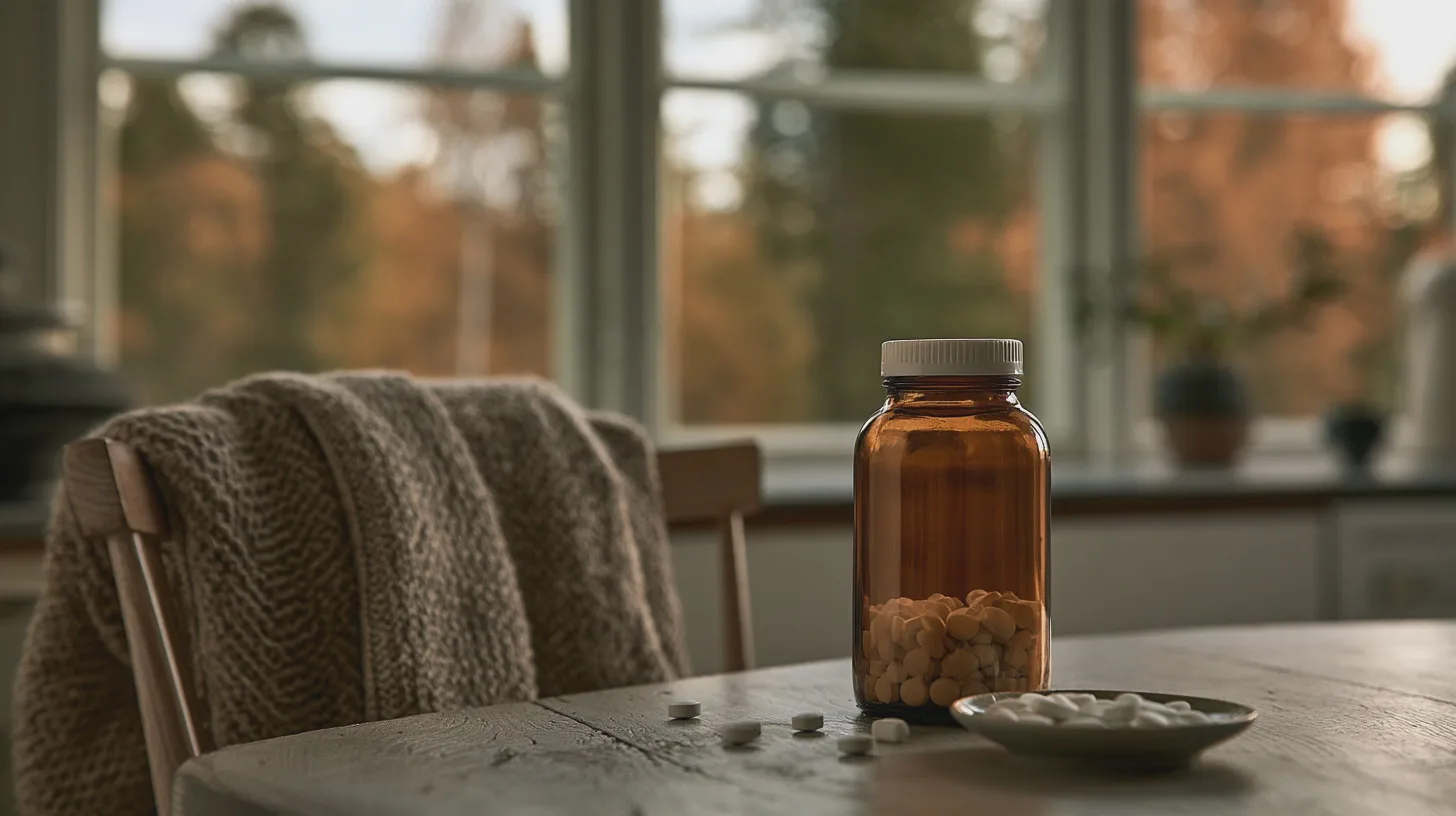
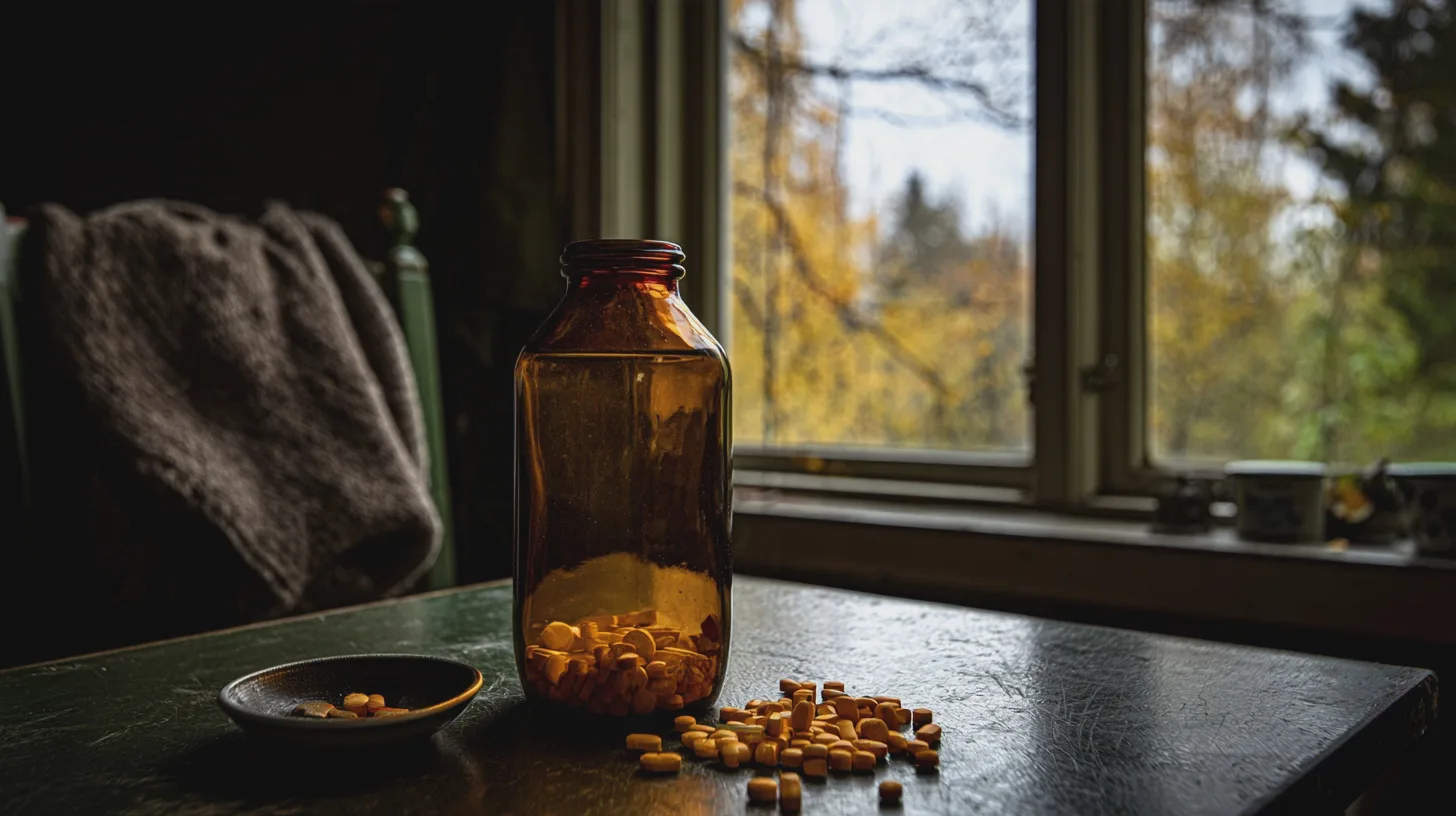
    If you are generally well and get outdoors in spring and summer, consider taking 10 micrograms (µg) of vitamin D daily from October through March. That is 400 international units (IU) on a supplement label. Put a reminder on your phone now; it takes about a minute and needs no specialist knowledge.

    Vitamin D helps your body regulate calcium and phosphate, which matter for healthy bones, teeth and muscles. In the UK, sunlight on your skin can provide much of what you need during the brighter months. Come autumn and winter, making enough is harder, and food alone is unlikely to fill the gap.

    Think of this as a precaution for ordinary life, not a test of whether you feel sufficiently ‘winterish’. A dull Tuesday is not evidence of vitamin D deficiency, and a supplement is not a proven shortcut to more energy or immunity against every bug doing the rounds.

    The NHS says most people can choose not to take a supplement from around late March or early April until the end of September. Northern Ireland’s Public Health Agency describes the winter window as October to late March or April. There is no need to agonise over which day in spring to stop: first decide whether the year-round advice below applies to you.

    When the summer break does not apply

    Here is a more useful question than ‘Do I own a raincoat?’: does sunlight regularly reach your skin, even in summer?

    The NHS advises 10 micrograms daily throughout the year if you are seldom outdoors, live in a care home or usually cover most of your skin outside. It also says people with darker skin — including those of African, African-Caribbean or South Asian background — should consider the same year-round routine, because they may make less vitamin D from sunlight.

    Look at your actual week. If work, caring responsibilities or illness keep you indoors for long stretches, a few sunny bank holidays may not reflect your usual exposure. A man who walks outdoors regularly in summer faces a different decision from one who rarely sees daylight. Skin colour and how much skin is exposed matter too; there is no useful ‘one size fits all’ sunbathing target here.

    Across the UK, the practical message is similar. Welsh Government guidance advises considering 10 micrograms in autumn and winter and says people who are housebound, cover their skin or have darker skin may need it all year. Food Standards Scotland encourages a daily 10-microgram supplement particularly from October to March and advises year-round use for higher-risk groups. Northern Ireland’s guidance also flags limited sun exposure and darker skin. None of this calls for chasing a tan: protect your skin from burning.

    October is the cue for most men; how much sun reaches your skin tells you whether to carry on in summer.

    Buy the dose, not the sales pitch

    Oily fish such as sardines and salmon, egg yolks and some fortified breakfast cereals contain vitamin D. They are useful foods, but they do not make the winter supplement advice redundant. Unlike milk in some other countries, UK cow’s milk is generally not fortified with vitamin D.

    For a straightforward option, Boots Vitamin D 10 µg Food Supplement comes in a pack of 90 tablets. Its listed price is £2.75, so roughly £3 for about three months is a fair approximate guide; prices can change. That is an example, not a special recommendation. A supermarket or pharmacy own-label product with the same daily dose will do the job. Take half a minute to check the ‘per tablet’ or ‘daily serving’ line for 10 µg or 400 IU.

    Already taking a multivitamin? Check its vitamin D content before adding another tablet. Do not confuse milligrams with micrograms, or assume ‘high strength’ means more useful. The 10-microgram recommendation is not an invitation to work your way towards the maximum.

    The NHS advises adults not to take more than 100 micrograms (4,000 IU) a day because too much vitamin D from supplements over time can cause calcium to build up in the body and harm the kidneys and heart. Some medical conditions call for a lower limit. Unsure what is in your existing supplements? Show the packets to a pharmacist.

    Know when a tablet is not the answer

    Routine supplementation and treatment for a suspected deficiency are different jobs. The 10-microgram tablet is a sensible seasonal measure for many people; it cannot diagnose a deficiency or replace an assessment of persistent symptoms.

    If you have unexplained bone pain or muscle weakness, speak to your GP. Do the same if you have a condition that affects nutrient absorption, kidney disease, or questions about vitamin D alongside prescribed medicines. Your GP can assess whether testing or a different approach is appropriate. NICE advises against routine vitamin D testing without symptoms, particularly high risk or another clinical reason. October arriving is not, by itself, a reason to buy a blood test.

    If a clinician has already diagnosed a deficiency or advised you to take a particular dose, that individual plan takes precedence over the general seasonal advice. Treatment for severe deficiency can involve a short course of much higher doses, with clinical oversight. Do not try to recreate it with handfuls of shop-bought tablets.

    For an ordinary question about which product to take, or whether two supplements overlap, a pharmacist is a good first stop. For symptoms or a medical condition, contact your GP. If you need urgent medical advice, use NHS 111; call 999 in an emergency.

    Otherwise, keep it boring: choose the right dose, decide whether you need it for six months or twelve, and get on with your day.

    vitamin-d-start-in-october-or-take-it-year-round_INS2_MJ

    The simple rule: consider 10 micrograms (400 IU) daily from October to March. If you get little sun or have darker skin, consider taking it all year. Check other supplements before doubling up, and ask your GP about possible deficiency rather than treating it yourself.

    Sources

  • September sleep slipping? Reset it with morning light

    September sleep slipping? Reset it with morning light

    The alarm goes off. It is still dark. By Thursday, bedtime has drifted off somewhere after the news, and you are considering a sleep tracker to tell you what you already know.

    Before you try to force an earlier bedtime, give your mornings some structure. A regular wake-up time, followed by daylight when it becomes available, is a better place to start than lying awake at 10pm feeling cross with yourself.

    The alarm rings in the dark, and bedtime starts drifting. A regular wake-up time and daylight after rising can steady your sleep without another gadget.

    Why an earlier bedtime is the wrong place to start

    Your body clock runs on a roughly daily rhythm. Light reaching your eyes helps tell your brain it is daytime; darkness helps signal that night is approaching. Morning light tends to nudge that rhythm earlier, while bright light late in the evening can nudge it later. When you get the light matters, not just how bright it is.

    Getting up at a fairly consistent time gives that rhythm another reliable cue. It also gives you a chance to encounter daylight at a similar point each day. That is why University College London Hospitals’ sleep guidance puts particular emphasis on a fixed getting-up time rather than insisting on a fixed bedtime.

    Of course, sleep is not simply a lighting problem. Stress, pain, alcohol, caffeine, medicines and interrupted breathing can all get in the way. Nor will waking early magically make you sleepy on command that night. You still need enough opportunity to sleep.

    Set an arbitrary early bedtime and you may just spend longer awake in bed, getting frustrated. Start instead with a wake-up time you can actually live with, then let bedtime follow when you feel sleepy. Think steady signal, not military operation.

    Make the first part of your day count

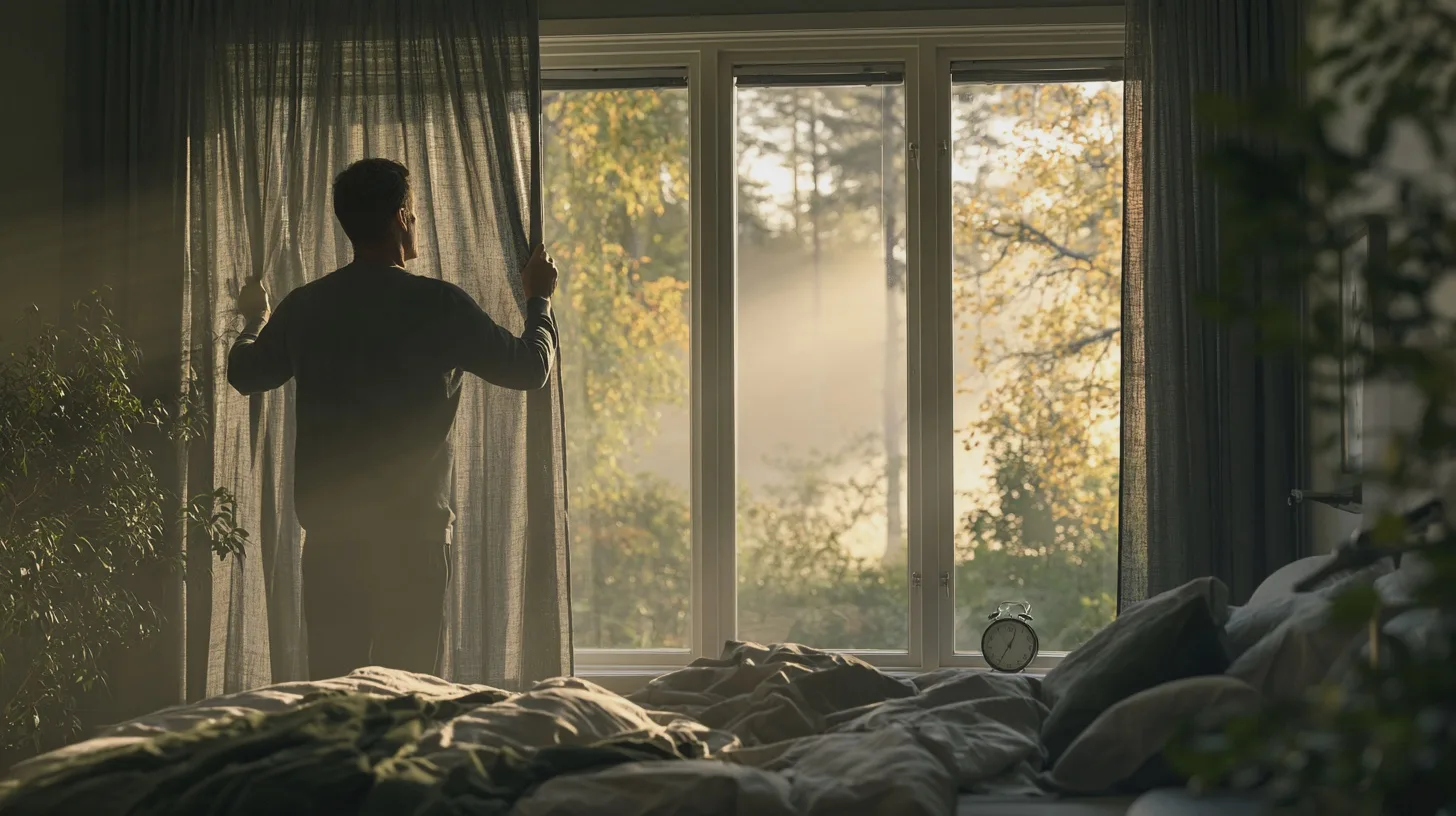
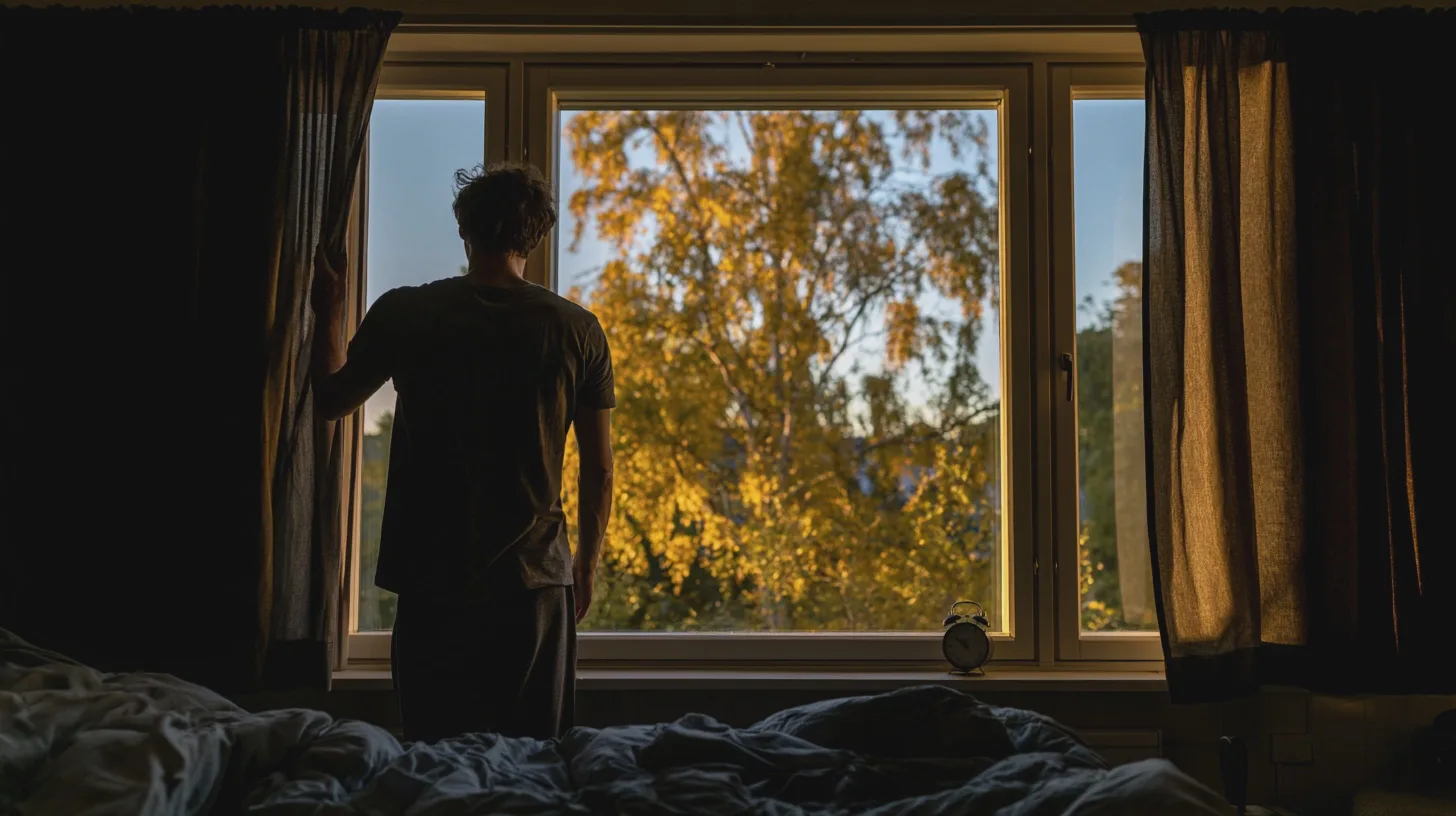
    Choose a weekday wake-up time that leaves enough room for sleep alongside work and family life. If your alarm is set for 7am, get up around 7am rather than repeatedly bargaining with it. Open the curtains and put the lights on if it is still dark; neither requires expertise beyond locating the switch.

    Once there is daylight to be had, get outdoors after rising. Take a short walk before work, spend part of your commute on foot, or step outside during your first break. Allow roughly 10 minutes for the outing as a practical way to make it happen, not as a prescribed light dose. You need not stare at the sky or turn it into exercise training.

    If dawn comes after your alarm, you have not missed your chance. Go outside when the morning brightens rather than waiting indoors for a perfect sunny day. Even under cloud, outdoor daylight is generally brighter than ordinary indoor lighting. A coat may be the most sophisticated equipment you need.

    It helps to attach the outing to something you already do: walk to the station, take your first phone call outside, or go round the block after breakfast. The aim is a repeatable routine, not a heroic one-off that lasts until Tuesday.

    Anchor the time you get up, take the first sensible chance to get outside in daylight, and let bedtime follow sleepiness, not the other way round.

    Keep the weekend from undoing the weekday

    Saturday need not begin with a work alarm. But get up at 7am all week and at midday on Sunday, and Monday morning may feel like crossing a time zone without the holiday. Keep your weekend wake-up time reasonably close to your weekday one. If you want a lie-in, aim for modest rather than monumental; an extra hour is a practical example, not a rule your body clock will enforce with a clipboard.

    Keep the daylight habit too. A walk for the paper, an errand on foot or a few minutes outside after breakfast will do. After a bad night, try not to make an extremely long lie-in your only recovery plan. More importantly, make room for adequate sleep across the week: consistency should not become a respectable-sounding way to run yourself short.

    In the evening, give yourself a little runway. Spend roughly an hour winding down if you can, turn down bright lights, and put the phone aside rather than taking work messages to bed. Go to bed when you feel sleepy, not because a sleep app has issued orders.

    If you regularly work shifts, care for someone overnight or have an unpredictable schedule, a perfect daily wake-up time may be impossible. Work with the most consistent pattern you can manage. This is a tool for ordinary life, not another reason to feel you have failed at sleep.

    Know what daylight can’t fix

    Stepping outside is not the same as using a light-therapy device. A light box is a deliberately bright product sometimes used for seasonal affective disorder, a form of depression with a seasonal pattern. Evidence for its effectiveness is mixed, and you do not need to buy one for a drifting September sleep routine. If you are considering one because your mood changes with the seasons, speak to your GP first, particularly if you have an eye condition or take medication that increases sensitivity to light.

    Give the wake-up-and-daylight routine a fair try, but do not treat it as a cure. If poor sleep continues despite changes to your habits, lasts for months, or makes daily life hard to manage, talk to your GP. They can look at possible causes and discuss appropriate help, which may include cognitive behavioural therapy for insomnia.

    Have that conversation sooner if someone reports loud snoring, gasping or pauses in your breathing, especially if you are very sleepy during the day. Those can be signs of sleep apnoea; a brighter morning will not sort out interrupted breathing. Persistent low mood or losing interest in things you normally enjoy also warrants a GP conversation rather than another attempt to optimise your alarm.

    And if you are too sleepy to drive safely, do not drive. Getting help matters rather more than keeping your wake-up streak intact.

    september-sleep-slipping-reset-it-with-morning-light_INS2_MJ

    For the coming week, pick a realistic wake-up time and pair it with a brief trip outdoors when daylight is available. Keep weekends broadly similar. If sleep or mood problems persist, or snoring comes with gasping or daytime sleepiness, speak to your GP.

    Sources

  • Why tiredness alone tells you very little

    Why tiredness alone tells you very little

    By mid-afternoon you are shattered, snapping at people you like and not especially interested in sex. Search those symptoms online and a testosterone checklist will probably find you before you find the kettle.

    Low testosterone is one possibility, but hardly the only one. On its own, tiredness tells you remarkably little. The useful question is not ‘How many boxes can I tick?’ but ‘What else might explain this, and what needs checking?’

    You're exhausted, irritable and less interested in sex. Before blaming testosterone, consider sleep, stress, medicines and other treatable causes — and when to ask your GP.

    The symptom list is not a diagnosis

    Fatigue, irritability, low mood and reduced sex drive can occur in men with testosterone deficiency. They also occur in men whose testosterone is not the problem. That overlap makes a symptom list a place to start a conversation, not finish one.

    Think of a checklist as a smoke alarm, not a laboratory. It tells you something deserves attention; it cannot tell you what is burning. If you have been sleeping badly, worrying about work and feeling flat, ticking ‘tired’, ‘poor concentration’ and ‘low sex drive’ may describe one difficult spell, not three separate clues to a hormone disorder.

    Nor does every change after 45 signal a sudden hormonal collapse. Testosterone deficiency is a real condition, but symptoms, ageing and a blood result need to be considered together. Seeing a symptom on a ‘low testosterone’ page does not make it specific to testosterone.

    A reduced sex drive is worth mentioning to a clinician, especially if it is a clear change for you or comes with erection difficulties. It can still have other explanations. The aim is not to talk yourself out of getting help. It is to avoid turning up with the diagnosis already written on the envelope.

    Look beyond hormones first

    Start with sleep. Too little can leave you tired and short-tempered, and broken sleep matters too. Loud snoring, waking with gasping or choking noises, and struggling to stay awake during the day are reasons to ask about sleep apnoea, rather than simply buying a ‘testosterone booster’.

    Stress can sap your energy and interest in sex. Depression can do both, sometimes without looking like the version you expected. If you have lost interest or pleasure in things you usually enjoy, tell your GP plainly. Low mood is not a character flaw, and it should not be filed under ‘probably hormones’ without a conversation.

    Think about what changed around the time your symptoms began. Some medicines can make you drowsy or affect sex drive; certain antidepressants and blood-pressure medicines are examples. Alcohol, relationship difficulties and an exhausting routine can muddy the picture. Do not stop a prescribed medicine yourself: ask your GP or pharmacist whether it could be playing a part.

    Medical causes deserve a look as well. Anaemia can cause tiredness, sometimes with breathlessness or palpitations. Thyroid problems can affect energy and mood; NICE advises clinicians to consider thyroid testing when there is reason to suspect thyroid disease, rather than taking one vague symptom as proof. Diabetes is another possible explanation for fatigue. None can be diagnosed from this paragraph, which is rather the point.

    A symptom list can start the conversation, but it cannot tell you testosterone is the answer.

    Know when to talk to your GP

    Book a GP appointment if you have been unusually tired for a few weeks without knowing why, if it is affecting everyday life, or if it comes with other symptoms such as weight loss or mood changes. A persistent drop in sex drive that worries you is also a perfectly reasonable reason to go. You do not need to prove you have low testosterone before asking for help.

    Before the appointment, spend roughly ten minutes making a few notes; no medical expertise required. When did the change begin? Has your sleep changed? Has anyone noticed loud snoring or gasping? Note changes in mood, sex drive or erections, any new medicines, and whether work, relationships or alcohol might be relevant. That gives your GP more to work with than ‘I feel knackered’ — accurate though it may be.

    Your GP can ask about your symptoms and circumstances, review medicines and decide whether an examination or blood tests would help. Depending on the picture, tests might look for anaemia, diabetes or thyroid problems as well as testosterone deficiency. The useful tests are those that answer a clinical question, not every item on an online hormone panel.

    If symptoms worsen sharply or you need urgent advice, use NHS 111. Call 999 in an emergency. For ongoing tiredness or a change in sex drive, though, a routine GP discussion is usually the sensible first step.

    A blood result needs a second look

    If testosterone deficiency looks possible, your GP can arrange an appropriate blood test. Testosterone is generally checked using a morning sample. A low result is not automatically a diagnosis: it needs to be considered alongside your symptoms, health and circumstances, and may need confirming with another morning test.

    That caution works both ways. A result does not make symptoms disrupting your life disappear; it helps your clinician decide what to investigate next. Equally, one low reading should not turn a complicated problem into a prescription by return post. North Cumbria Integrated Care’s patient guidance describes assessment based on symptoms and low morning results on at least two occasions before testosterone replacement may be considered.

    If deficiency is confirmed, your GP may discuss referral or treatment options. But testosterone treatment is not guaranteed to fix tiredness, mood or concentration. Those symptoms may have other causes that need attention in their own right. The same NHS trust explicitly cautions that replacement may not improve every symptom on its list.

    So take the symptoms seriously, but do not let a checklist call the shots. Ask what the tests mean, whether a result needs repeating and what else could explain how you feel. Finding the cause is a better goal than chasing a particular number on a blood test.

    why-tiredness-alone-tells-you-very-little_INS2_MJ

    Tiredness, low mood and reduced sex drive are reasons to look more closely, not a diagnosis of low testosterone. Think about sleep, stress, medicines and other health conditions; if symptoms persist or affect your life, speak to your GP about an assessment and appropriate tests.

    Sources

  • Flu jab now or later? The midlife timing trap

    Flu jab now or later? The midlife timing trap

    The pharmacy offers you a flu jab while you’re still in a light jacket. Too soon? Better to save it for January, when winter has properly shown its teeth?

    For most men in their fifties, that is the wrong puzzle to solve. What matters is whether you want the protection, whether you qualify for a free jab and when you can actually get one.

    Your pharmacy offers a flu jab before the first cold snap. Should you take it now, wait for winter, or skip it altogether?

    The autumn offer is not too early by default

    A flu jab does not work instantly. According to the NHS, it usually takes up to 14 days to work. Leave it until flu is already going round at work and you may have given it an avoidable head start.

    Timing does matter, but the answer is less clever than it sounds. Protection can decline over time in adults. That is why the UK Health Security Agency (UKHSA) and NHS England scheduled the 2026–27 flu programme for most eligible adults to start on 1 October 2026, rather than in September. They aim to have most vaccinations completed by the end of November, before flu typically peaks.

    That is programme planning, not a reason to hold out for the last available appointment in November. If a suitable slot comes up in October or November, taking it is generally more useful than trying to guess exactly when this season’s flu will arrive. Viruses are notoriously poor at respecting your diary.

    There are exceptions to the English October start, including adults for whom a clinician judges earlier vaccination appropriate, such as someone about to begin immunosuppressive treatment. And do not assume every UK nation starts on the same date: Scotland’s 2026 offer began in September, while Wales set its own programme timetable. If your circumstances are unusual, ask your GP or vaccination team instead of applying a rule intended for everybody else.

    What the jab can do — and what it cannot

    The first potential benefit is simple: vaccination can reduce your chance of catching flu. It cannot bring that chance down to zero. The vaccine is updated each year to target the strains expected to circulate, but the match and the protection people get vary between seasons and individuals.

    A second benefit is worth keeping separate. If you do catch flu after vaccination, it may be milder and less likely to cause serious complications or lead to hospital care. ‘I got flu despite the jab’ does not, by itself, mean the jab did nothing.

    Just as mistaken is treating the jab as permission to ignore symptoms or visit someone vulnerable while ill. It reduces risk; it is not an invisibility cloak. If you are unwell, take sensible steps to avoid passing on an infection; if you have a high temperature on appointment day, ask the vaccination provider about rearranging.

    Why have it again each year? Both sides of the equation change: protection fades, and the strains the vaccine is designed to cover are updated. Last autumn’s jab is not a standing reservation on this winter’s protection.

    If a health condition puts you at higher risk, there is a stronger case for accepting an offer. If you are healthy, the likely personal benefit is less certain in absolute terms, but ‘not guaranteed’ is not the same as ‘not worth considering’.

    For a man in his fifties, the useful autumn jab is usually the one he actually gets — not the one he planned to book at precisely the right moment.

    Being fifty-something does not automatically make it free

    Across the UK, a healthy man in his fifties does not qualify for a free seasonal flu jab on age alone. The routine age threshold is 65, though the precise age cut-off for a season can differ by nation. Do not bank on the old assumption that everyone over 50 gets one free.

    Your circumstances could change that. Eligible long-term conditions can include diabetes, certain heart or lung conditions, kidney disease and a weakened immune system. Carer status, living with someone who is immunosuppressed, working in health or social care, or living in a care facility may also count. The details differ across the UK, and having, say, mild asthma does not automatically settle eligibility. If you are unsure, ask your GP surgery or pharmacist.

    England: the NHS lists the eligible groups and says most can be vaccinated from 1 October 2026. Scotland: NHS inform lists additional groups, including unpaid carers and some people with particular occupational exposures; its 2026 flu offer began in September. Wales: the 2026–27 programme includes clinical risk groups, carers, household contacts of immunocompromised people and certain other groups; someone turning 65 by 31 March 2027 meets its age rule. Northern Ireland: check the Department of Health’s 2026–27 programme and ask a local provider to confirm your eligibility before booking; do not assume England’s NHS booking page reflects its arrangements.

    Your booking decision, without the faff

    Start by checking eligibility. Looking at your national guidance and asking a provider if anything is unclear should take a few minutes; no specialist knowledge required. Mention relevant conditions, caring responsibilities or health and social care work, rather than just your age.

    If you qualify in England, book through the NHS website or NHS App, or ask your GP surgery or a participating pharmacy. In Scotland, eligible people are sent appointment details or booking instructions; NHS inform has an online booking portal and a vaccination helpline. In Wales, adults in a clinical risk group can use their GP surgery or some community pharmacies; health and social care workers should ask their employer. In Northern Ireland, ask your GP surgery, a participating community pharmacy or your Health and Social Care Trust about this season’s local appointments. England’s online booking service is not for the other nations.

    If you do not qualify for a funded jab, ask about a private one. Boots, for example, lists its private winter flu jab at approximately £22, subject to availability; its stated appointment takes around 10 minutes. Check the current price and whether your chosen branch offers it before setting off. Your employer may offer vaccination too.

    In short: if you are offered a suitable autumn appointment, you generally need not put it off to chase perfect timing. If you are offered a September jab and have particular medical circumstances, check with your GP or vaccination provider. Missed autumn? Ask whether vaccination is still available rather than writing off the whole season.

    flu-jab-now-or-later-the-midlife-timing-trap_INS2_MJ

    Your call: check whether your circumstances qualify you for a free jab, then take a suitable autumn slot if you want protection. Think lower risk, not a guarantee you will avoid flu.

    Sources